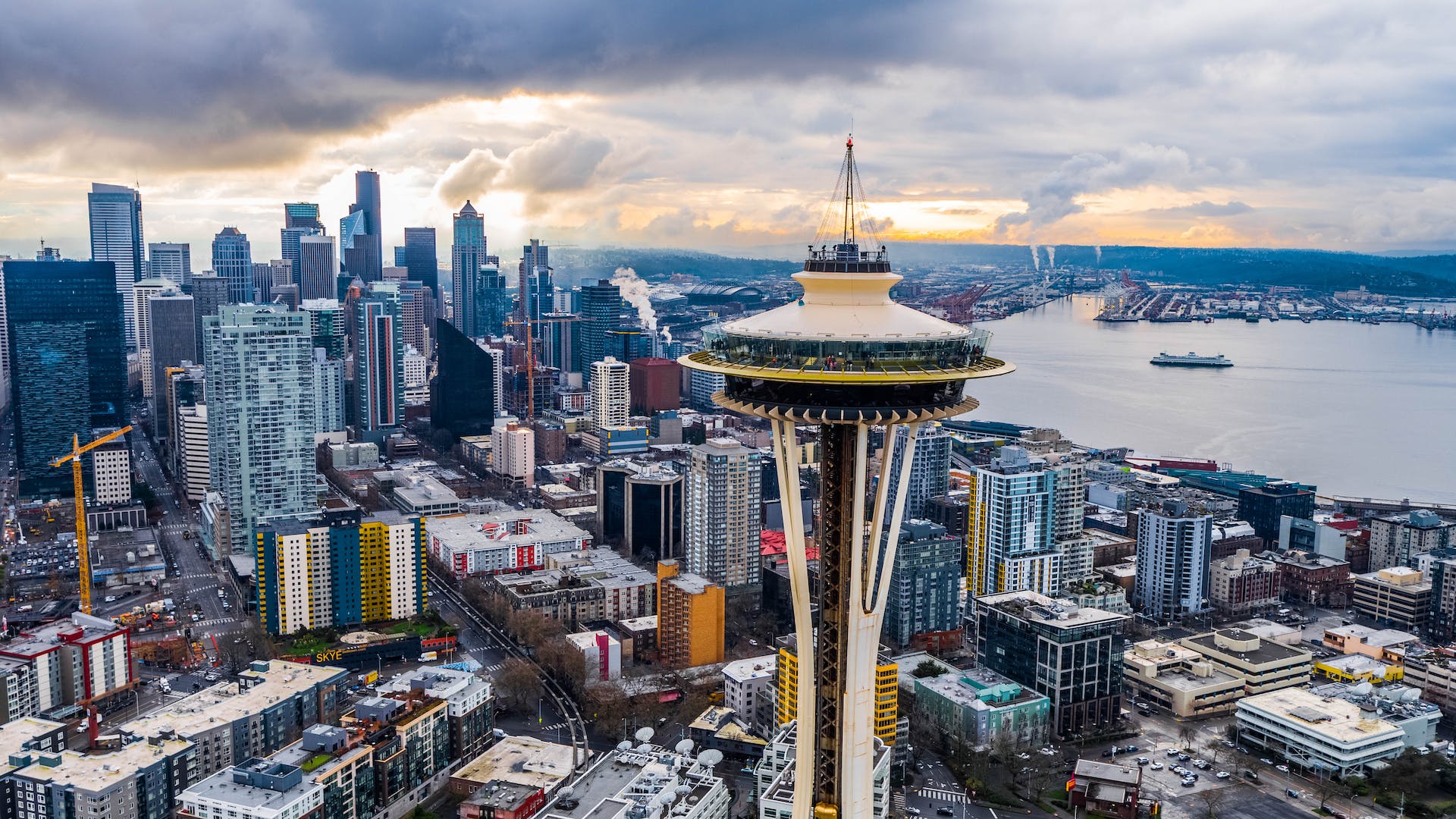
The Seattle event landscape
Seattle runs one of the busiest trade show calendars in the region. Convention weeks stack close together, hotel blocks compete for the same nights, and the venues themselves shape what is possible on the floor.
The attendees vary by show — some weeks draw regional operators, others pull international buyers in for a single conference — but the floor mechanics stay consistent. Every booth needs graphics production, show services, labor calls, and a plan for the specific building it's landing in.
Visit Bellevue maintains a dedicated convention service-provider section covering photographers, AV, catering, transportation, and related event vendors, reinforcing that the Eastside has its own event-support ecosystem, which sets the practical ceiling for a booth program working the market.
Seattle Convention Center anchors downtown Seattle with planner, exhibitor, venue-service, and dock-and-freight workflows organized around the same central event platform.
The buildings that host Seattle events
Different Seattle venues mean different floor plans, different labor rules, and different freight realities.
Across the Seattle venue set, what changes between buildings are the labor model, the rigging approval path, the drayage setup, and the published move-in window. The plan has to match the specific building.
Hangar 30 at Magnuson Park: hangar 30 at Magnuson Park adds large-format flexible event space for brand activations, expos, and custom environment builds outside the downtown core.
How Seattle floor operations work
Labor in Seattle runs venue-by-venue, not citywide. Each building publishes its own rules for who handles what on the floor.
Practically, that means pulling the current exhibitor manual for every show and confirming a handful of items in writing: which tasks the venue's house crews cover, which tasks the show's general contractor covers, and what an exhibitor or their appointed contractor can handle without escalation.
Seattle Convention Center publicly routes exhibitors through a venue-managed resource structure that includes exhibitor services, docks and freight, and guidelines and policies.